Saturday, 30 November 2013

You may think you’re looking at an alien, but this is an extraordinarily rare glimpse of a deep-sea cephalopod known...


You may think you’re looking at an alien, but this is an extraordinarily rare glimpse of a deep-sea cephalopod known as the Bigfin Squid from the family Magnapinnidae. It was caught on camera in 2007 by a Shell Oil Company ROV at a depth of 2386 meters (roughly 1.5 miles) at the Perdido oil drilling site down in the Gulf of Mexico. This fantastic image is a composite created using the haunting ROV video footage. 

Magnapinna squids are one of the deep-sea more ethereal creatures. Little is known of these squid as very few have ever been captured, although over the last decade with the increased usage of remotely operated vehicles (ROV) and submersibles more and more video is emerging of them.

They are unusual in both that the fins are up to 90% of the length of the body, i.e. the mantle, and the ridiculously long length of the arms. The squid often will hold some of the arms at a 90˚ angles from the side of the body.

Source:
http://deepseanews.com/2013/11/an-amazing-image-of-the-elusive-big-fin-squid/

Reference:
http://en.wikipedia.org/wiki/Bigfin_squid

Watch the video:
Deep-sea squid (Magnapinna sp.)

All of Earth’s Air and Water


All of Earth’s Air and Water
The sphere of water is ~1400km in diameter. The ISS orbits at ~400km.
The density of the air-sphere is 1atm (at sea level).

I'd say this is kinda disturbing!

Source and further reading:
http://sploid.gizmodo.com/astonishing-picture-of-earth-compared-to-all-its-water-1472149072

Reference:
http://apod.nasa.gov/apod/ap120524.html

Image credit: FĂ©lix Pharand-DeschĂȘnes

Why you can't tickle yourself?


Why you can't tickle yourself?
It’s a well-known fact that you can’t tickle yourself.
Try it; you (mostly) can’t. Brush your own fingers across the soles of your feet. You certainly feel a sensation, but it’s nothing like when someone else does it.

But why can’t you tickle yourself? If someone else can tickle you, then you should be able to tickle yourself. After all, I can feel my own touch just the same as someone else’s can’t I?

The answer is, psychologists think, that our brains have a basic function which is designed to tell whether some sensation is caused by ourselves, or whether it comes from outside, this concept is known as corollary discharge (aka efferent copy).
An efferent is an output, a  neurotransmitter going out to your muscle, and whenever you perform an action, a copy of the signal is sent to your higher processes so you're aware that you, yourself are initiating the action. If someone else tickles you, you don't receive a copy of the efferent signal and so your body doesn't account for it and you get tickled.
http://en.wikipedia.org/wiki/Efference_copy

People who are unable to send out these efferent copies develop subtle but pervasive disturbances in perception and begin to disconnect their own actions with their own bodies. It's also thought to be one of the driving factors behind the psychotic elements of schizophrenia, e.g. hallucinations.
http://thebrainbank.scienceblog.com/2012/12/24/why-cant-we-tickle-ourselves-but-schizophrenics-can/

To test this out some researchers have created a simple tickling robot. The way it works is you put your left hand on a little stick and move it around. This causes a sponge to move around on your right hand.

It turns out that when the robot works like this, people feel little, because it’s like they are causing the sponge to move themselves, through this ‘robot’. It’s like when you brush a feather duster across your own palm: your brain knows you’ve caused the sensation, so it doesn’t feel that ticklish.

But, when the robot introduces a delay of one-third of a second between their left hands moving the stick, and feeling the sponge move on their right hands, suddenly it tickles!
The reason is that the ‘robot’ has tricked the mind into thinking the source of the movement is external. And because it feels like someone else is causing the sensation, then it tickles!


References and further reading:
http://www.mitpressjournals.org/doi/abs/10.1162/089892999563607
http://www.spring.org.uk/2013/08/why-you-cant-tickle-yourself.php
http://www.ncbi.nlm.nih.gov/pubmed/10943682
Image via Reddit

Tongue-controlled wheelchair could offer a faster way for quadriplegics to get around


Tongue-controlled wheelchair could offer a faster way for quadriplegics to get around
Researchers are developing a method for quadriplegics to control wheelchairs and mouse cursors using only the movement of their tongue, and it’s turning out to be far more effective than one of the most popular current control schemes. Researchers from Georgia Tech have been working on a tongue-based control system since 2005, and in their latest trial runs, they’re finding that it’s a significantly more accurate way to issue commands than one existing and popular method. 

Source and further reading:
http://www.theverge.com/2013/11/27/5151174/researchers-run-wheelchair-tongue-control-tests-outperforms-sip-puff

Watch video:
Georgia Tech Tongue Drive Technology

Wildlife photographer Sergey Gorshkov caught this moment at the Taimyr Tundra in Siberia, Russia where a Arctic Fox...


Wildlife photographer Sergey Gorshkov caught this moment at the Taimyr Tundra in Siberia, Russia where a Arctic Fox dived head first after a mouse buried beneath the snow.

Scientists have recently discovered that foxes  also use the Earth’s magnetic field when hunting prey using this technique. The odds of a fox catching a mouse buried beneath the snow rise to nearly 75% if the predator is facing north. The fox uses the invisible magnetic field of the planet to triangulate and home in on its prey, buried in up to 3 feet of snow, from 18 feet away.

Know more:
http://earthsky.org/earth/foxes-use-earths-magnetic-field-to-jump-on-prey
More about Sergey Gorshkov awesome work here:
http://gorshkov-photo.com/english/portfolio/

Zebra longwing caterpillars evolved the ability to thrive despite feeding on toxic passionflower plants.


Zebra longwing caterpillars evolved the ability to thrive despite feeding on toxic passionflower plants. 
The adults are unusual among butterflies in that they eat pollen as well as sip nectar. This ability contributes to their longevity—the Zebra Longwing can live up to 6 months as an adult.

Adults exhibit pupal mating in which males wait for a female to emerge from her pupa. Upon emergence, two or more males may fight in order to win a copulation. The winner mates with the females and prevents other males from doing so through a chemical transfer.

Know more:
http://en.wikipedia.org/wiki/Heliconius_charithonia
Gif via American Museum of Natural History
http://www.amnh.org/explore/news-blogs/news-posts/thanksgiving-weekend-at-the-museum-origami-holiday-tree-power-of-poison-live-butterflies-and-more?utm_source=social-media&utm_medium=tumblr&utm_term=2013-11-27-wed&utm_campaign=weekend

Your Brain Has 2 Clocks


Your Brain Has 2 Clocks
How do you sense the passing of time?
Fascinating new research on the brain’s two clocks. Pair with the science of our internal time via Scientific American.

Did you make it to work on time this morning? Go ahead and thank the traffic gods, but also take a moment to thank your brain. The brain’s impressively accurate internal clock allows us to detect the passage of time, a skill essential for many critical daily functions. Without the ability to track elapsed time, our morning shower could continue indefinitely. Without that nagging feeling to remind us we’ve been driving too long, we might easily miss our exit. 

But how does the brain generate this finely tuned mental clock? Neuroscientists believe that we have distinct neural systems for processing different types of time, for example, to maintain a circadian rhythm, to control the timing of fine body movements, and for conscious awareness of time passage. Until recently, most neuroscientists believed that this latter type of temporal processing,  the kind that alerts you when you’ve lingered over breakfast for too long, is supported by a single brain system. However, emerging research indicates that the model of a single neural clock might be too simplistic. A new study, recently published in the Journal of Neuroscience by neuroscientists at the University of California, Irvine, reveals that the brain may in fact have a second method for sensing elapsed time. What’s more, the authors propose that this second internal clock not only works in parallel with our primary neural clock, but may even compete with it.

Past research suggested that a brain region called the striatum lies at the heart of our central inner clock, working with the brain’s surrounding cortex to integrate temporal information. For example, the striatum becomes active when people pay attention to how much time has passed, and individuals with Parkinson’s Disease, a neurodegenerative disorder that disrupts input to the striatum, have trouble telling time.

But conscious awareness of elapsed time demands that the brain not only measure time, but also keep a running memory of how much time has passed. Scientists have long known that a part of the brain called the hippocampus is critically important for remembering past experiences. They now believe that it might also play a role in remembering the passage of time. Studies recording electrical brain activity in animals have shown that neurons in the hippocampus signal particular moments in time. But the hippocampus isn’t always necessary for tracking time. Remarkably, people with damage to their hippocampus can accurately remember the passage of short time periods, but are impaired at remembering long time intervals. These findings hint that the hippocampus is important for signaling some -- but not all – temporal information. If this is the case, what exactly is this time code used for, and why is it so exclusive?

In their new study, the researchers tried to unravel this mystery by training rats to discriminate between different time intervals. They then rewarded the rats with treats when they indicated, by choosing between different odors, that they could tell how much time had passed. Before some of the trials the scientists injected a chemical that temporarily inactivates the hippocampus. This allowed them to test whether a functional hippocampus is necessary to distinguish between different time intervals.

The rats with inactive hippocampi could tell the difference between vastly different time intervals (e.g., 3 versus 12 minutes) just as well as the control rats, but performed no better than chance at detecting differences between similar periods of time (e.g., 8 versus 12 minutes). This suggests that the hippocampus is important for distinguishing between similar time intervals, but isn’t needed when the intervals are very different. But oddly enough, this pattern only held up at long time periods; rats with nonfunctional hippocampi were not just normal at discriminating between similar time periods at short scales (e.g., 1 versus 1.5 minutes), but they in fact performed better.

So while the hippocampus does signal elapsed time, it has a very particular role in doing so. It specifically discriminates between similar time periods at long time scales – on the order of several minutes. When you can tell that you’ve been showering for 10 minutes, and not 15, you can thank your hippocampus. But when you sense the difference between 1 and 1.5 minutes, or 20 minutes and an hour, other brain regions have taken over as internal time-keeper.

While it may seem odd for the hippocampus to perform such a highly specialized function, this is perfectly consistent with what we know it does in other domains. The hippocampus is renowned for its ability to discriminate between overlapping objects or experiences – a process known as pattern separation. This study suggests it pattern separates many features of an experience, detecting subtle differences between objects, places and time periods.

The hippocampus might be oblivious to events that happen on a second-by-second scale, but we’re certainly able to track the rapid passage of these moments. Considering that the striatum is believed to track time on the order of seconds, the authors propose that the hippocampus and striatum might actually compete with one another, such that when the hippocampus is quieted, the striatum is freed to function even more effectively than usual. Although I wouldn’t advise intentionally damaging your hippocampus (you’ll develop a significantly graver problem), doing so could theoretically boost your ability to track the passage of short time periods.

But it’s unclear whether this inhibitory relationship is reciprocal or unidirectional. If the hippocampus and striatum indeed function as separate, antagonistic clocks, does the striatum suppress the hippocampus, just as the hippocampus appears to impair the striatum? Scientists know that damaging the striatum leads to a host of problems processing time. But could it also confer one particular time-telling superpower – that of distinguishing between similar long time intervals - by launching the hippocampus into high-gear? Only further research will tell.

So when you make it to work on time tomorrow, acknowledge not just one, but your multiple inner clocks, and rest easy you have a healthy hippocampus.

Source:
http://www.scientificamerican.com/article.cfm?id=your-brain-has-two-clocks
Reference:
http://www.brainpickings.org/index.php/2012/05/11/internal-time-till-roenneber/
Image via Wikimedia Commons

Friday, 29 November 2013

A few bat facts

A few bat facts
It isn't easy being a bat. With Dracula, a few cases of rabies, their pointy teeth, and the fact that they hang upside down to sleep, bats inspire fear in many people. But, bats are amazing creatures, even though they eat bugs . . . and sometimes blood.

1. Bats are the only mammals able to fly.
 And you thought it was the winged marmoset! Bats are exceptional in the air. Their wings are thin, giving them what is called, in flight terms, "airfoil." The power bats have to push forward is called "propulsion."

2. A single brown bat can catch around 1,200 mosquito-size insects in one hour.
In Bracken Cave, Texas, it's estimated that the 20 million Mexican free-tailed bats that live there eat about 200 tons of insects . . . each night.

3. Vampire bats don't suck blood.
 They lap it up. Calm down. There are only three species of vampire bats in the whole world. If you are traveling in Central or South America, however, you might see a vampire bat bite a cow and then lick blood from the wound -- no sucking involved.

4. Bats don't have "fat days."
The metabolism of a bat is enviable -- they can digest bananas, mangoes, and berries in about 20 minutes.

5. Fewer than 10 people in the last 50 years have contracted rabies from North American bats.
Due to movies and television, bats are thought to be germ machines, bringing disease and toxins to innocent victims. Not true. Bats avoid people. If you are bitten by a bat, go to the doctor, but don't start making funeral arrangements -- you'll probably be fine.

6. Bats use echolocation to get around in the dark.
 Bats don't see very well and do a lot of living at night, so they have to rely on navigational methods other than sight. Bats send out beeps and listen for variations in the echoes that bounce back at them and that's how they get around. Bats are nocturnal, mostly because it's easier to hunt bugs and stay out of the way of predators when it's dark. Bats do use their eyesight to see things in the daytime, but most bat business is done under the blanket of night for convenience.

7. Bats make up a quarter of all mammals.
Yep, you read that right. A quarter of all mammals are bats. There are more than 1,100 species of bats in the world. That's a lot of bats!

8. More than 50 percent of bat species in the United States are either in severe decline or are listed as endangered.
You don't know what you've got until it's gone. Industry, deforestation, pollution, and good old-fashioned killing have wiped out many bats and their habitats.

9. Cold night? Curl up next to a bat!
Inside those drafty caves they like so much, bats keep warm by folding their wings around them, trapping air against their bodies for instant insulation.

10. An anticoagulant found in vampire bat saliva may soon be used to treat human cardiac patients. The same stuff that keeps blood flowing from vampire bats' prey seems to keep blood flowing in human beings, too. Scientists in several countries are trying to copy the enzymes found in vampire bat saliva to treat heart conditions and stop the effects of strokes in humans.

11. Bats have only one pup a year. Most mammals of smallish size have way more offspring than that. Think cats, rabbits, and rats.

12. The average bat will probably outlive your pet dog.
The average lifespan of a bat varies, but some species of brown bat can live to be 30 years old. Considering that other small mammals live only two years or so, that's impressive.

13. Bats wash behind their ears. Bats spend more time grooming themselves than even the most image-obsessed teenager. They clean themselves and each other meticulously by licking and scratching for hours.

Sources and further reading:
http://animals.nationalgeographic.com/animals/mammals/common-vampire-bat/
http://www.defenders.org/bats/bats
http://animal.discovery.com/mammals/13-incredible-bat-facts.htm

Gif via Reddit - The Vampire bat  is one of the only species of bat that has retained its ability to maneuver on land, not only can they walk on land but they can also hop and run at surprisingly fast speeds!
X'ray image credit: Nick Veasey

Influenza - excellent animation and info.

Influenza - excellent animation and info.
Influenza, or flu, is a respiratory illness that is caused by a virus. Flu is highly contagious and is usually spread by the coughs and sneezes of a person who is infected.
https://www.youtube.com/watch?v=7Omi0IPkNpY#t=141

Sometimes when it rains I remember this phrase written by Gustave Flaubert in one of his books...


Sometimes when it rains I remember this phrase written by Gustave Flaubert in one of his books...
"When it is misty, in the evenings, and I am out walking by myself, it seems to me that the rain is falling through my heart and causing it to crumble into ruins.” 

Astronomers Shed More Light on Tycho’s Supernova Remnant


Astronomers Shed More Light on Tycho’s Supernova Remnant

The Tycho’s supernova, also known as SN 1572 or Tycho’s Nova, was discovered by the Danish astronomer Tycho Brahe in November 1572.

Modern astronomers know that the event was a Type Ia supernova, caused by the explosion of a white dwarf star. The explosion spewed elements like silicon and iron into space at speeds of more than 5,000 km/s. When that eject a rammed into surrounding interstellar gas, it created a shock wave – the equivalent of a cosmic ‘sonic boom.’ That shock wave continues to move outward today at about 300 times the speed of sound. The interaction also created a violent backwash,  a reverse shock wave that speeds inward at 1,000 times the speed of sound.

“It’s like the wave of brake lights that marches up a line of traffic after a fender-bender on a busy highway,” explained Dr Randall Smith of the Harvard-Smithsonian Center for Astrophysics, who is the senior author of the paper submitted for publication in the Astrophysical Journal.

The reverse shock wave heats gases inside the supernova remnant and causes them to fluoresce. The process is similar to what lights household fluorescent bulbs, except that the supernova remnant glows in X-rays rather than visible light. The reverse shock wave is what allows astronomers to see supernova remnants and study them, hundreds of years after the supernova occurred.

“Thanks to the reverse shock, Tycho’s supernova keeps on giving,” Dr Smith said.

Source:
http://www.sci-news.com/astronomy/science-tychos-supernova-remnant-01574.html

References:
http://www.nasa.gov/mission_pages/WISE/multimedia/gallery/pia13119.html
http://www.sci-news.com/astronomy/article00507.html
http://iopscience.iop.org/0004-637X/

The fetal circulation


The fetal circulation
The fetal circulation is the circulatory system of a human fetus, often encompassing the entire fetoplacental circulation that also includes the umbilical cord and the blood vessels within the placenta that carry fetal blood.

Blood from the placenta is carried to the fetus by the umbilical vein. Less than a third of this enters the fetal ductus venosus and is carried to the inferior vena cava, while the rest enters the liver proper from the inferior border of the liver. The branch of the umbilical vein that supplies the right lobe of the liver first joins with the portal vein.
The blood then moves to the right atrium of the heart. In the fetus, there is an opening between the right and left atrium (the foramen ovale), and most of the blood flows through this hole directly into the left atrium from the right atrium, thus bypassing pulmonary circulation. The continuation of this blood flow is into the left ventricle, and from there it is pumped through the aorta into the body.

Some of the blood moves from the aorta through the internal iliac arteries to the umbilical arteries, and re-enters the placenta, where carbon dioxide and other waste products from the fetus are taken up and enter the maternal circulation.

Some of the blood entering the right atrium does not pass directly to the left atrium through the foramen ovale, but enters the right ventricle and is pumped into the pulmonary artery. In the fetus, there is a special connection between the pulmonary artery and the aorta, called the ductus arteriosus, which directs most of this blood away from the lungs (which aren't being used for respiration at this point as the fetus is suspended in amniotic fluid).

Sources and further reading:
http://www.embryology.ch/anglais/pcardio/umstellung01.html
http://en.wikipedia.org/wiki/Fetal_circulation

Image: In the placenta the blood becomes enriched with nutrients and oxygen and gets via the unpaired umbilical vein into the fetal blood circulation system.
Gif via Human Embryology


Thursday, 28 November 2013

Space Buddha and Nazi Legacy


Space Buddha and Nazi Legacy
Ernst SchÀfer was a good scientist and a good Nazi. In 1938-39 he led a German expedition to Tibet sponsored by SS leader Heinrich Himmler, who was fascinated by Aryan culture. Although SchÀfer specialized in the study of birds, and indeed took many bird specimens with him back to Germany, the most extraordinary artifact turned out to be of extraterrestrial origin.

When he or one of his expedition members discovered an ancient Buddhist statue with a swastika—the ancient Indian luck symbol adopted by the Nazis as their symbol and now tainted by their legacy, prominently displayed on the chest, they couldn’t help but bring it back. At least that is the most plausible explanation of how it came to Munich, where it was held in privately owned obscurity until it was auctioned off in 2009.

When scientists analyzed the statue last year, they found that it was carved from a meteoric fragment. The 10kg iron statue showed a composition indicating it came from an ataxite meteorite, the rarest kind of meteorite. It is believed to be 1,000 years old and depicts a Buddhist deity. It may have come from the Chinga meteorite, which fell near the border between Siberia and Mongolia ten to twenty thousand years ago.

Sources and further reading:
http://www.sciencedaily.com/releases/2012/09/120926104255.htm
http://en.wikipedia.org/wiki/Chinga_meteorite
http://en.wikipedia.org/wiki/1938%E2%80%9339_German_expedition_to_Tibet
http://en.wikipedia.org/wiki/Aryan
Image via Science Daily

Sky Map


Sky Map
Sky map is an educational infographic visualizing apparent motion of the stars. It shows the sky during the longest night in the year (The Winter Solstice, from 23th to 24th December). This project was based on materials sourced date provided by Planetarium in ChorzĂłw, Silesia. The project consist of catalog of the star constellations, poster and an animation, which shows the apparent motion.

Credit: Paulina UrbaƄska
http://www.behance.net/gallery/Sky-Map/2434181

Ice Disks


Ice Disks
Although extremely rare, ice disks, also known as ice circles, do indeed appear naturally from time to time when conditions are perfect.

Ice discs form on the outer bends in a river where the accelerating water creates a force called ‘rotational shear’, which breaks off a chunk of ice and twists it around. As the disc rotates, it grinds against surrounding ice — smoothing into a circle. A relatively uncommon phenomenon, one of the earliest recordings is of a slowly revolving disc was spotted on the Mianus River and reported in a 1895 edition of Scientific American.

Sources and further reading:
http://en.wikipedia.org/wiki/Scientific_American
http://en.wikipedia.org/wiki/Ice_circle

Watch video:
http://www.dailymail.co.uk/news/article-2514162/Eerie-rare-ice-circle-forms-North-Dakota-Sheyenne-River.html
Image via Wikimedia Commons

Au revoir ISON


Au revoir ISON

Comet ISON vanished in the Sun’s corona during the close approach.
Gif via scanzen

The Three Values of Science


The Three Values of Science
“No great mind has ever existed without a touch of madness” Aristotle said, ...interesting article about the values of science explained by a wizoid.

Once in Hawaii, I was taken to see a Buddhist temple. In the temple, a man said, "I am going to tell you something that you will never forget." And then he said "To every man is given the key to Heaven. The same key opens the gates of Hell."

And so it is with science.

Richard Feynman, a Nobel Prize winning American theoretical physicist, celebrated thinker, and architect of the atomic bomb, has long been known as one of science's greatest supporters. But it was he who spoke those forthright words in 1963 at a lecture at the University of Washington.

Years earlier, in the wake of watching his powerful, atom-splitting creations wreak unspeakable havoc and end thousands of lives in Hiroshima and Nagasaki, the affable and cheery Feynman grew melancholic, grappling with a painful nuclear reality -- one he was instrumental in establishing -- as well as uncertainty over the shape of things to come.

"I didn't know what the future was going to look like, and I certainly wasn't anywhere near sure that we would last until now," he recalled in 1987. "Therefore one question was: is there some evil involved in science?"

Feynman was struggling with an existential crisis only a member of the Manhattan Project could truly experience.
"Put another way, what is the value of the science I had dedicated myself to--the thing I loved--when I saw what terrible things it could do? It was a question I had to answer."

In 1955, in an extraordinary address delivered to the National Academy of Sciences, Feynman did. From his soul-searching, born out of the choking dust of a mushroom cloud, the physicist expounded upon three simple but vital values tendered by science.

"The first way in which science is of value is familiar to everyone," Feynman said. "It is that scientific knowledge enables us to do all kinds of things and to make all kinds of things."
This could neither be more obvious, nor more true. Though once firmly anchored to the ground, man first realized that by displacing a large enough surface area of water, even immense objects could float. And so we set out to sea. Next, we found out that heating air within a large tarp made the apparatus less dense than even the air we breath. And so we took to the skies. Years later, we fired rockets with enough force to overcome the bonds of gravity, and thus break free of our atmosphere. And so we entered space. Science powered it all.
But in that quintessential power to devise and create awesome ideas and inventions comes the power to wield such constructs for evil, Feynman cautioned.

"Scientific knowledge is an enabling power to do either good or bad - but it does not carry instructions on how to use it," he added.

Feynman then shared the second value.
"Another value of science is the fun called intellectual enjoyment which some people get from reading and learning and thinking about it, and which others get from working in it."
Though Feynman recognized that mere enjoyment isn't necessarily valuable to society, he contended that the thrill imparted by science is of a different, more inspirational nature.

"With more knowledge comes a deeper, more wonderful mystery, luring one on to penetrate deeper still. Never concerned that the answer may prove disappointing, with pleasure and confidence we turn over each new stone to find unimagined strangeness leading on to more wonderful questions and mysteries - certainly a grand adventure!"
When a child gets a taste of such an adventure, that is when a scientist is born. Perhaps, like Jack Andraka, they'll develop a simple test for pancreatic cancer? Or maybe, like Taylor Wilson, they'll try to invent the energy source of the future? Such is the exuberant energy that science musters.

"I would now like to turn to a third value that science has," Feynman continued. "The scientist has a lot of experience with ignorance and doubt and uncertainty, and this experience is of very great importance, I think."
Speaking humbly and hopefully, Feynman then shared what he knew.
"Now, we scientists... take it for granted that it is perfectly consistent to be unsure, that it is possible to live and not know. But I don't know whether everyone realizes this is true. Our freedom to doubt was born out of a struggle against authority in the early days of science. It was a very deep and strong struggle: permitting us to question - to doubt - to not be sure. I think that it is important that we do not forget this struggle and thus perhaps lose what we have gained. Herein lies a responsibility to society."

Feynman pressed on, explaining how so many people have, over the centuries, claimed to offer simple and all-encompassing "answers." When, in fact, the key to finding genuine answers to life's difficult questions is first embracing that you don't know all of them.
"If we want to solve a problem that we have never solved before, we must leave the door to the unknown ajar," Feynman said. To do so leads to what he described as an "open channel."
"It is our responsibility as scientists... to proclaim the value of this freedom; to teach how doubt is not to be feared but welcomed and discussed; and to demand this freedom as our duty to all coming generations."

Source: "The Value of Science." Richard Feynman. University of Washington.
Story via Ross Pomeroy/ Real Clear Science
http://www.realclearscience.com/blog/2013/11/is-science-of-any-value.html

Stars probably move in peanut-shell or figure of eight-shaped orbits


Stars probably move in peanut-shell or figure of eight-shaped orbits
Two months ago astronomers created a new 3D map of stars at the centre of our Galaxy (the Milky Way), showing more clearly than ever the bulge at its core. Previous explanations suggested that the stars that form the bulge are in banana-like orbits, but a paper published this week in Monthly Notices of the Royal Astronomical Society suggests that the stars probably move in peanut-shell or figure of eight-shaped orbits instead.

Read more:
http://www.sciencedaily.com/releases/2013/11/131127110309.htm

Infinite....circles =)


Infinite....circles =)

Bees & Bombs creation

"I like nonsense, it wakes up the brain cells."


"I like nonsense, it wakes up the brain cells."
          Dr. Seuss

Wednesday, 27 November 2013

Frozen smoke?


Frozen smoke?

Well, not really. Aerogel may look like frozen smoke but is a synthetic, ultralight material.
It may look airy, but it feels like styrofoam to the touch, and just 2 grams can support a 2.5 kg brick.

Know more:
http://en.wikipedia.org/wiki/Aerogel

Hey pretty =)


Hey pretty =)
Greta Oto
 
The pretty creature, who is a native of Mexico and South America, does not lack the tissues that make up a full wing, but rather the coloured scales that other butterflies have.

Know more:
http://en.wikipedia.org/wiki/Greta_oto
Image via bgdphotooftheday

Bjarni Mikkelsen, a marine biologist at the National Museum of the Faroe Islands misses being blown away as whale...


Bjarni Mikkelsen, a marine biologist at the National Museum of the Faroe Islands misses being blown away as whale corpse explodes in front of him.
The gut-busting reaction came after a buildup of gases, specifically methane, caused by the putrefaction process.

Read the article:
http://news.nationalpost.com/2013/11/27/scientist-narrowly-misses-being-blown-away-as-whale-corpse-explodes-in-front-of-him/

Multiple Sclerosis medical animation


Multiple Sclerosis medical animation
MS  is an inflammatory disease in which the insulating covers of nerve cells in the brain and spinal cord are damaged. This damage disrupts the ability of parts of the nervous system to communicate, resulting in a wide range of signs and symptoms including physical, mental, and sometimes psychiatric problems.

This medical animation shows how T cells cross the blood brain barrier and attacks the myelin. When the myelin is lost, the axons can no longer effectively conduct signals. 

Animation by Polygon

Scientists grow artificial skin from stem cells of umbilical cord


Scientists grow artificial skin from stem cells of umbilical cord
Scientists have developed a breakthrough technique to grow artificial skin - using stem cells taken from the umbilical cord. The new method means major burn patients could benefit from faster skin grafting, the researchers say, as the artificial skin can be stored and used when needed.

"Creating this new type of skin using stem cells, which can be stored in tissue banks, means that it can be used instantly when injuries are caused, and which would bring the application of artificial skin forward many weeks," says study author Antonio Campos, professor of histology at the University of Granada in Spain.

Read more:
http://www.medicalnewstoday.com/articles/269313.php
Image via Wikimedia Commons

What is a cone?


What is a cone?

It is not a fruit and it is not a seed.  What most of us call a “pine cone” is really a cluster of highly modified woody scales tightly packed together to protect the developing conifer seeds inside.

Conifers are the cone bearing trees; and while most everyone knows that pines and spruces belong to this group, the conifers are represented by over 550 species, including hemlocks, firs, cedars, cypresses, yews, and even the common indoor Norfolk Island Pine.

The term conifer is often used as a synonym for evergreen, and that really isn’t correct.  Some conifers are not evergreens (examples:  Bald Cypress, Dawn Redwood, and Larch), and many evergreens are not conifers (examples:  Rhododendron and Holly). 

Every conifer species has male and female cones.  While both the male and female cones start out small, the males do not grow to any appreciable size, and are shed from the plant soon after releasing pollen.  They are rather inconspicuous and often go unnoticed.  The female cones grow large after pollination, maturing in a matter of months for some species, and years for others.  Mature female cone size varies with species, from as small as ¼ inch to over 2 feet in length.

Most conifer species produce male and female cones on the same individual.  But some, like the yews and junipers, appear on separate plants.  Not all conifers make scaly cones.  Yews and junipers have a fleshy covering over each seed that resembles a small fruit more than a cone.

While developing, the scales of female cones are clasped together and usually held tight by resin.  When the seeds between the scales reach maturity, the cone responds by changing color from green to brown, and separating its scales to expose the seeds that will soon fall out.

For some species, the cones remain tightly closed until exposed to very warm temperatures.  

Conifers have two basic means by which their seeds are dispersed;  wind or animals.  Wind dispersed seeds are usually small, with a prominent wing that allows the seed to be carried far from the parent plant by a breeze.  Seeds that rely on animals for dispersal are larger and non-winged.  They provide a nutritional reward for the animals, and those not consumed immediately are usually carried some distance from the parent plant and hidden.  If not recovered, they germinate and grow.

Conifer cones and their seeds have been used for a variety of purposes.  Besides the obvious use of cones for decorations, some seeds, like those of pinyon pines, are used in prepared foods and baking.  The seeds of junipers provide the distinctive taste of gin.

The conifers represent a very successful part of the plant world.  They enjoy a worldwide distribution, and have been around for the past 200 million years, producing their unique cones as their means of reproduction.

Sources:
http://en.wikipedia.org/wiki/Conifer_cone
http://faculty.ucc.edu/biology-ombrello/pow/conifer_cones.htm
Gif via reddit

I love when artists use x-ray's in their work =)


I love when artists use x-ray's in their work =)
X-Ray Portrait of Couple by Ayako Kanda and Mayuka Hayashi

Hippocampal neuron receiving excitatory contacts (63x)


Hippocampal neuron receiving excitatory contacts (63x)

Nikon Small World, Dr. Kieran Boyle,
University of Glasgow
Institute of Neuroscience and Psychology

Tuesday, 26 November 2013

Baby Dinosaur Skeleton Unearthed In Canada


Baby Dinosaur Skeleton Unearthed In Canada
The tiny, intact skeleton of a baby rhinoceroslike dinosaur has been unearthed in Canada.
The toddler was just 3 years old and 5 feet (1.5 meters) long when it wandered into a river near Alberta, Canada, and drowned about 70 million years ago. The beast was so well-preserved that some of its skin left impressions in the nearby rock.
The fossil is the smallest intact skeleton ever found from a group of horned, plant-eating dinosaurs known as ceratopsids, a group that includes the iconic Triceratops.

Read more about this:
http://www.livescience.com/41486-smallest-intact-baby-ceratopsid-found.html

The Secrets of Seahorse Success


The Secrets of Seahorse Success
I confess... I love seahorses since I was a little girl. They're so cute and cheerful.
But how does the seahorse, one of the slowest swimming fish in the sea, manage to capture its nimbler prey? In a word, stealth. Like most fish, seahorses nab their prey by slurping in the water surrounding their victims—a technique called suction feeding.

Seahorses can effectively strike at prey only 1 millimeter or so in front of them, so they must approach within that distance without disturbing the water so much that their quarry flees.

Now, lab tests show that fluid disturbances just ahead of the snout of the dwarf seahorse (Hippocampus zosterae) are only one-fifth as large as those elsewhere around its head, researchers report online in Nature Communications. Thus, the fish was able to approach within striking range of its prey 84% of the time. Once within striking distance, the not-quite-galloping gourmand snaps its neck forward in less than a millisecond to successfully capture a meal 94% of the time.

Source:
http://news.sciencemag.org/plants-animals/2013/11/video-secrets-seahorse-success
Image Nathan Rupert

The Neuroscientist Who Discovered He Was a Psychopath


The Neuroscientist Who Discovered He Was a Psychopath
How can you know if you are a psychopath? And what happens if you really are a psychopath? Interesting article via The Smithsonian.

One afternoon in October 2005, neuroscientist James Fallon was looking at brain scans of serial killers. As part of a research project at UC Irvine, he was sifting through thousands of PET scans to find anatomical patterns in the brain that correlated with psychopathic tendencies in the real world.

“I was looking at many scans, scans of murderers mixed in with schizophrenics, depressives and other, normal brains,” he says. “Out of serendipity, I was also doing a study on Alzheimer’s and as part of that, had brain scans from me and everyone in my family right on my desk.”
“I got to the bottom of the stack, and saw this scan that was obviously pathological,” he says, noting that it showed low activity in certain areas of the frontal and temporal lobes linked to empathy, morality and self-control. Knowing that it belonged to a member of his family, Fallon checked his lab’s PET machine for an error (it was working perfectly fine) and then decided he simply had to break the blinding that prevented him from knowing whose brain was pictured. When he looked up the code, he was greeted by an unsettling revelation: the psychopathic brain pictured in the scan was his own.

Many of us would hide this discovery and never tell a soul, out of fear or embarrassment of being labeled a psychopath. Perhaps because boldness and disinhibition are noted psychopathic tendencies, Fallon has gone all in towards the opposite direction, telling the world about his finding in a TED Talk, an NPR interview and now a new book published last month, The Psychopath Inside. In it, Fallon seeks to reconcile how he—a happily married family man—could demonstrate the same anatomical patterns that marked the minds of serial killers.

“I’ve never killed anybody, or raped anyone,” he says. “So the first thing I thought was that maybe my hypothesis was wrong, and that these brain areas are not reflective of psychopathy or murderous behavior.”
But when he underwent a series of genetic tests, he got more bad news. “I had all these high-risk alleles for aggression, violence and low empathy,” he says, such as a variant of the MAO-A gene that has been linked with aggressive behavior. Eventually, based on further neurological and behavioral research into psychopathy, he decided he was indeed a psychopath—just a relatively good kind, what he and others call a “pro-social psychopath,” someone who has difficulty feeling true empathy for others but still keeps his behavior roughly within socially-acceptable bounds.

It wasn’t entirely a shock to Fallon, as he’d always been aware that he was someone especially motivated by power and manipulating others, he says. Additionally, his family line included seven alleged murderers, including Lizzie Borden, infamously accused of killing her father and stepmother in 1892.
But the fact that a person with the genes and brain of a psychopath could end up a non-violent, stable and successful scientist made Fallon reconsider the ambiguity of the term. Psychopathy, after all, doesn’t appear as a formal diagnosis in the Diagnostic and Statistical Manual of Mental Disorders in part because it encompasses such a wide range of symptoms. Not all psychopaths kill; some, like Fallon, exhibit other sorts of psychopathic behavior.
“I’m obnoxiously competitive. I won’t let my grandchildren win games. I’m kind of an asshole, and I do jerky things that piss people off,” he says. “But while I’m aggressive, but my aggression is sublimated. I’d rather beat someone in an argument than beat them up.”

Why has Fallon been able to temper his behavior, while other people with similar genetics and brain turn violent and end up in prison? Fallon was once a self-proclaimed genetic determinist, but his views on the influence of genes on behavior have evolved. He now believes that his childhood helped prevent him from heading down a scarier path.

“I was loved, and that protected me,” he says. Partly as a result of a series of miscarriages that preceded his birth, he was given an especially heavy amount of attention from his parents, and he thinks that played a key role.

This corresponds to recent research: His particular allele for a serotonin transporter protein present in the brain, for example, is believed to put him at higher risk for psychopathic tendencies. But further analysis has shown that it can affect the development of the ventromedial prefrontal cortex (the area with characteristically low activity in psychopaths) in complex ways: It can open up the region to be more significantly affected by environmental influences, and so a positive (or negative) childhood is especially pivotal in determining behavioral outcomes.

Of course, there’s also a third ingredient, in addition to genetics and environment: free will. “Since finding all this out and looking into it, I’ve made an effort to try to change my behavior,” Fallon says. “I’ve more consciously been doing things that are considered ‘the right thing to do,’ and thinking more about other people’s feelings.”
But he added, “At the same time, I’m not doing this because I’m suddenly nice, I’m doing it because of pride—because I want to show to everyone and myself that I can pull it off.”

Source:
http://blogs.smithsonianmag.com/science/2013/11/the-neuroscientist-who-discovered-he-was-a-psychopath/

Time-Lapse of the Geminid Meteor Shower.


Time-Lapse of the Geminid Meteor Shower. 
Viewed from Big Sur, CA  
December 2012
Credit: Kenneth Brandon

Our Secret Universe - The Hidden Life of the Cell


Our Secret Universe - The Hidden Life of the Cell
Interactive page of the hidden life of the cell...from extracellular matrix till inside the nucleus, enjoy the ride =)
http://secret-universe.co.uk/

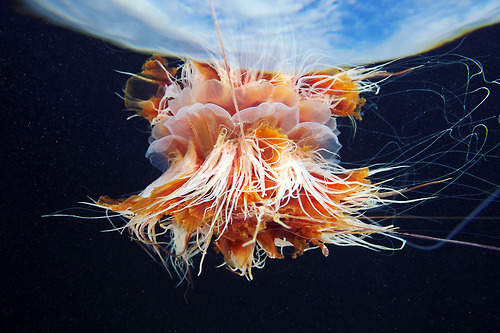
These jellyfish swimming close to the surface look like they’re flying.

These jellyfish swimming close to the surface look like they’re flying. Images by underwater photographer  Alexander Semenov


Creating a wireframe of a hyperboloid by joining up one circle to another sitting below in the third dimension.


 Creating a wireframe of a hyperboloid by joining up one circle to another sitting below in the third dimension. 

Matt Henderson creation.

What is Berlin Heart?


What is Berlin Heart?
Berlin heart is an artificial heart.
An artificial heart is a device that replaces the heart. Artificial hearts are typically used to bridge the time to heart transplantation, or to
permanently replace the heart in case heart transplantation is impossible. Although other similar inventions preceded it going back to the late 1940s, the first artificial heart to be successfully implanted in a human was the Jarvik-7, designed by Robert Jarvik and implemented in 1982.

More about artificial hearts:
http://en.wikipedia.org/wiki/Artificial_heart

But how Berlin Heart works?
The Berlin Heart is not totally implanted inside the body. Physicians insert cannulas, or flexible tubes, in the heart and they extend through the skin and connect to a small pump located outside the body. That pump, along with its computerized drive unit, maintains blood flow. The device improves their circulation and keeps them alive until they receive a heart transplant. In some rare instances, patients recover enough to come off the device and maintain blood flow on their own.

Berlin  Heart Pediatric Ventricular Assist Device (VAD) has been used in more than 1,000 pediatric cases worldwide. Without the assistance of the device, some children awaiting a transplant would become increasingly sick as their heart failed.
The Berlin Heart improves the chances of survival for children of all ages as compared to ECMO support.

Sources and further reading:
http://www.texaschildrensblog.org/2012/08/unprecedented-study-shows-berlin-heart-device-provides-lifesaving-bridge-for-young-children-and-babies/
http://www.fda.gov/MedicalDevices/ProductsandMedicalProcedures/DeviceApprovalsandClearances/Recently-ApprovedDevices/ucm302715.htm
Image via Texas Children's Blog

How do dolphin brains compare to human brains?


How do dolphin brains compare to human brains?
Dolphin brains are pretty comparable to human brains; dolphins in many species have brains that are larger than ours. Humans only come out on top when you correct for differences in body weight. Even then, dolphins are typically second to us in terms of relative mass.
MRI scans have shown that dolphin brains, in relation to their body size, are about four to five times larger than any other animal of similar size.

Brain size is not the real measure of how these sea mammals compare to humans, though. What really matters is how their brains function. That's true of humans, of course. It's all of the unique ways our brains are wired that help us use them like supercomputers. Imaging also shows that the area of the brain known for higher-ordered thinking, namely the neocortex , is proportionally larger in the dolphin. That makes them different from great white sharks. In the shark, the largest brain component is the olfactory bulb, which detects scents. And domestic dogs get a little of both: A dog has a neocortex, but it's proportionally smaller than the one in a human brain. Canines have four times the odor processors of humans in their brains, though.

Scientists have long studied and learned from how dolphins use sonar to navigate the seas and objects in them. Dolphin brains also have many features correlated with higher brain functions similar to human brains. Research has shown that they comprehend language, at least certain whistled commands. Captive dolphins also have been taught to answer yes or no when asked simple questions with about 75 percent accuracy. They're using an artificial language, though, and tests of their intelligence and communication abilities continue.
Dolphins also can be social, understand some abstract concepts and recognize themselves in mirrors.

Sources and further reading:
http://www.dolphinresearch.org.au/bottlenose.php
http://news.discovery.com/animals/whales-dolphins/dolphins-smarter-brain-function.htm
http://www.dolphin-institute.org/our_research/dolphin_research/dolphinresearchpublications.htm
Image via imgur

Monday, 25 November 2013

Regulatory T cells


Regulatory T cells
Regulatory T cells (Tregs), formerly known as suppressor T cells, are a subpopulation of T cells which modulate the immune system, maintain tolerance to self-antigens, and abrogate autoimmune disease.
Mouse models have suggested that modulation of Tregs can treat autoimmune disease and cancer, and facilitate organ transplantation.
Specifically, Treg cells maintain order in the immune system by enforcing a dominant negative regulation on other immune cells.

Know more:
http://intimm.oxfordjournals.org/content/21/10/1105.full
Regulatory T cells infographic via BioLegend