Friday, 30 September 2016

I want to fall to sleep with you


I want to fall to sleep with you,
and I couldn’t care less
whether it is in
layers upon layers
of clothing
or only our skin,
all I really want is to wake up
not knowing
where I end and you begin.
~ BT

#wordsofwisdom   #personalnonsense   #enhancemyspinenerves   #lickmybrainfurniture

Once upon a time...mission complete


Once upon a time...mission complete
On the last day of her incredible mission, Rosetta slowly crashed into the surface of Comet 67P/Churyumov-Gerasimenko.

Photos of the day: Here are two of the final images taken by the Rosetta spacecraft before it crashed into the comet 67P earlier today. The first photo, taken from about 16 km above the surface, reveals the comet's uneven terrain. The second photo is the last Rosetta relayed before impact. Taken from an altitude of 51 meters, it will help scientists understand the rock and ice that compose the comet's surface. The resolution is 5 mm/pixel.

Reference:
https://www.youtube.com/watch?v=vcYo-qQ5HbA

#space   #ESA   #rosetta   #science   #research

Colorful Light Pillars


Colorful Light Pillars
Pictured below are light pillars, a local phenomenon that can appear as a distant one. In most places on Earth, a lucky viewer can see a Sun-pillar, a column of light appearing to extend up from the Sun caused by flat fluttering ice-crystals reflecting sunlight from the upper atmosphere.

Usually these ice crystals evaporate before reaching the ground. During freezing temperatures, however, flat fluttering ice crystals may form near the ground in a form of light snow, sometimes known as a crystal fog. These ice crystals may then reflect ground lights in columns not unlike a Sun-pillar. In the below picture, the colorful lights causing the light pillars surround a ice-skating rink in Fairbanks, Alaska.  

Image & info via APOD
Credit & Copyright: Walter Tape (Alaska Fairbanks), Figure 8-1, Atmospheric Halos

Read & learn:
http://www.atoptics.co.uk/halo/lpil.htm

#naturalphenomena   #lightpillars

Thursday, 29 September 2016

“Puddle Jumper” taken in 1925 by Friedrich Seidenstucker (1882-1966), a German photographer known for his...


“Puddle Jumper” taken in 1925 by Friedrich Seidenstucker (1882-1966), a German photographer known for his snapshot-like pictures of people on the street in Berlin.

I like the unknown feeling of this photo. Is just life captured by a simple click...and besides this is in Berlin.
It feels like the quiet before the storm. In 14 years from this captured moment WWII will start.

Photo courtesy of MoMA.

#history   #berlinstreets   #vintagephotos   #wrappmysensations

Wednesday, 28 September 2016

Five Hundred Meter Aperture Spherical Telescope


Five Hundred Meter Aperture Spherical Telescope
The Five-hundred-meter Aperture Spherical Telescope (FAST) is nestled within a natural basin in China's remote and mountainous southwestern Guizhou province. Nicknamed Tianyan, or the Eye of Heaven, the new radio telescope is seen in this photograph taken near the start of its testing phase of operations on September 25.

Designed with an active surface for pointing and focusing, its enormous dish antenna is constructed with 4,450 individual triangular-shaped panels. The 500 meter physical diameter of the dish makes FAST the largest filled, single dish radio telescope on planet Earth. FAST will explore the Universe at radio frequencies, detecting emission from hydrogen gas in the Milky Way and distant galaxies, finding faint galactic and extragalactic pulsars, and searching for potential radio signals from extraterrestrials.

Image & info via APOD
http://apod.nasa.gov/apod/astropix.html
Image Credit & Copyright: Jeff Dai (TWAN)

#space   #nasa   #science   #FAST

"We should all start to live before we get too old. Fear is stupid. So are regrets."


"We should all start to live before we get too old. Fear is stupid. So are regrets."
― Marilyn Monroe

#wordstoliveby   #marilynmonroe   #feelmysenses

Murmuration of birds is an amazing sight - a swooping mass of thousands of birds whirling in the sky above your...


Murmuration of birds is an amazing sight - a swooping mass of thousands of birds whirling in the sky above your head.

Starling flocks, it turns out, are best described with equations of “critical transitions” — systems that are poised to tip, to be almost instantly and completely transformed, like metals becoming magnetized or liquid turning to gas. Each starling in a flock is connected to every other. When a flock turns in unison, it’s a phase transition.

Starlings may simply be the most visible and beautiful example of a biological criticality that also seems to operate in proteins and neurons, hinting at universal principles yet to be understood.

Article:
http://www.mnn.com/earth-matters/animals/stories/the-incredible-science-behind-starling-murmurations

Video source:
https://www.youtube.com/watch?v=nsM8rWeQiG8

#biodiversity   #birdsmurmuration   #coolcritters

Tuesday, 27 September 2016

Scooping


Scooping
Some beaks are big, with the ability to get bigger.
For example, the pelican has a pouch-like beak it can expand when it's trying to scoop up fish. Brown Pelicans are known for diving into the water to catch fish.

The pouch on the pelican's lower bill is usually folded up, but it can get bigger when the bird is fishing. A pelican's pouch can hold 11 liters of water.

Even though the pelican's tongue is tiny, a complex set of specialized tongue muscles control the pouch. By contracting these muscles, the pelican tightens the pouch after catching a fish, expelling water and forcing the prey down its throat.

Tongue muscles are also used in gular fluttering, a surprisingly effective evaporative cooling mechanism. The bird rapidly flutters the pouch by contracting and relaxing the muscles, kind of like a dog panting, sometimes at a remarkable flutter-rate of 200 times a minute.

Pelicans perform strange-looking exercises to stretch and maintain their pouch in a brand of pelican yoga. They will gape, holding their mouths wide open. In another pose, they point the bill straight up to the sky, stretching the pouch. Or most evocatively, a bird will turn its pouch completely inside out by forcing it over its breast.

Know more:
http://animals.nationalgeographic.com/animals/birds/pelican/
http://ngm.nationalgeographic.com/2006/06/pelican-grace/did-you-know-learn

Photo via reddit

#biodiversity   #beaks   #coolcritters   #pelicans

NGC 3576: The Statue of Liberty Nebula


NGC 3576: The Statue of Liberty Nebula
What's happening in the Statue of Liberty nebula? Bright stars and interesting molecules are forming and being liberated. The complex nebula resides in the star forming region called RCW 57. This image showcases dense knots of dark interstellar dust, bright stars that have formed in the past few million years, fields of glowing hydrogen gas ionized by these stars, and great loops of gas expelled by dying stars.

A detailed study of NGC 3576, also known as NGC 3582 and NGC 3584, uncovered at least 33 massive stars in the end stages of formation, and the clear presence of the complex carbon molecules known as polycyclic aromatic hydrocarbons (PAHs). PAHs are thought to be created in the cooling gas of star forming regions, and their development in the Sun's formation nebula five billion years ago may have been an important step in the development of life on Earth.

The featured image was taken at the Cerro Tololo Inter-American Observatory in Chile.  

Image & info via APOD
http://apod.nasa.gov/apod/astropix.html
Image Credit & Copyright: S. Mazlin, J. Harvey, R. Gilbert, & D. Verschatse (SSRO/PROMPT/UNC)

#space   #nasa   #science   #nebula

Why do we Hiccup?


Why do we Hiccup?
What causes hiccups? Doctors point out that a round of hiccups often follows from stimuli that stretch the stomach, like swallowing air, or too rapid eating or drinking. 
Others associate hiccups with intense emotions, or our response to them: laughing, sobbing, anxiety, and excitement.

Let’s look at what happens when we hiccup.  
It begins with an involuntary spasm or sudden contraction of the diaphragm, the large dome-shaped muscle below our lungs that we use to inhale air.  This is followed almost immediately by the sudden closure of the vocal cords and the opening between them, which is called the glottis.

The movement of the diaphragm initiates a sudden intake of air, but the closure of the vocal cords stops it from entering the windpipe and reaching the lungs. It also creates the characteristic sound– ‘hic’
The medical term for hiccups is known as “singultus.”

To date, there is no known function for hiccups; they don’t seem to provide any medical or physiological advantage.  Why begin to inhale air, only to suddenly stop it from actually entering the lungs?

In a 2003 study, a group of scientists led by Christian Straus proposed that hiccups are a hangover from our evolutionary past. Straus et al. suggest that hiccups originate from our amphibian ancestors. The evidence they point to is between the mechanism of hiccups in humans and the breathing method of amphibians such as frogs.

The contraction of the diaphragm and closure of the glottis allowed “primitive air breathers” that still possessed gills to breath. This is similar to many modern amphibians, where the mysterious spasm that many of us find annoying is actually vital in amphibians to push water across their gills and stop water getting into the lungs.

In the study, researchers suggest that while we no longer have our frog-like breathing abilities, the brain circuitry controlling gill ventilation is still conserved in mammals today. Straus et al. point to other similarities between hiccupping and gill ventilation in animals like tadpoles as further evidence for their theory. The frequency of gill breathing in tadpoles is reduced by increased CO2 concentration and an increase in C02 is thought to decrease the frequency of hiccups, which is why some people recommend breathing in and out of a paper bag.

Watch TED-Ed Lesson Why do we hiccup? - John Cameron
http://ed.ted.com/lessons/why-do-we-hiccup-john-Cameron

Study:
http://www.ncbi.nlm.nih.gov/pmc/articles/PMC3504071/#b2
Animation by Black Powder Design

#hiccups   #medicine   #health   #science   #research

Monday, 26 September 2016

I am either guarded as a prison cell or open as a wound.


I am either guarded as a prison cell or open as a wound. Always one extreme or the other. You’ll either know nothing at all about me, or everything there is to know.
BT

#wordsofwisdom   #geometryofthoughts   #secretcore

Jupiter's Europa from Spacecraft Galileo


Jupiter's Europa from Spacecraft Galileo
What mysteries might be solved by peering into this crystal ball? In this case, the ball is actually a moon of Jupiter, the crystals are ice, and the moon is not only dirty but cracked beyond repair. Nevertheless, speculation is rampant that oceans exist under Europa's fractured ice-plains that could support life.

This speculation was bolstered again this week by released images from the Hubble Space Telescope indicating that plumes of water vapor sometimes emanate from the ice-crusted moon -- plumes that might bring microscopic sea life to the surface.

Europa, roughly the size of Earth's Moon, is pictured here in natural color as photographed in 1996 by the now-defunct Jupiter-orbiting Galileo spacecraft. Future observations by Hubble and planned missions such as the James Webb Space Telescope later this decade and a Europa flyby mission in the 2020s may further humanity's understanding not only of Europa and the early Solar System but also of the possibility that life exists elsewhere in the universe.  

Info & image via APOD
http://apod.nasa.gov/apod/astropix.html
Image Credit: Galileo Project, JPL, NASA

#nasa   #space   #science   #europa   #research

DXL sounding rocket


DXL sounding rocket
In the last century, humans realized that space is filled with types of light we can’t see – from infrared signals released by hot stars and galaxies, to the cosmic microwave background that comes from every corner of the universe. Some of this invisible light that fills space takes the form of X-rays, the source of which has been hotly contended over the past few decades.

It wasn’t until the flight of the DXL sounding rocket, short for Diffuse X-ray emission from the Local galaxy, that scientists had concrete answers about the X-rays’ sources. In a new study, published Sept. 23, 2016, in the Astrophysical Journal, DXL’s data confirms some of our ideas about where these X-rays come from, in turn strengthening our understanding of our solar neighborhood’s early history. But it also reveals a new mystery – an entire group of X-rays that don’t come from any known source.

Paper:
http://iopscience.iop.org/article/10.3847/0004-637X/829/2/83

Source & further reading:
http://www.nasa.gov/feature/goddard/2016/nasa-funded-sounding-rocket-solves-one-cosmic-mystery-reveals-another

Graphic:
NASA-funded researchers sent a sounding rocket through the sun’s dense helium wake, called the helium-focusing cone, to understand the origin of certain X-rays in space. Conceptual graphic not to scale.
Credits: NASA Goddard's Conceptual Image Lab/Lisa Poje

#nasa   #space   #DXL   #research   #xrays   #science

Sunday, 25 September 2016

Planet Aurora


Planet Aurora
What bizarre alien planet is this ? It's planet Earth of course, seen through the shimmering glow of aurorae from the International Space Station. About 400 kilometers (250 miles) above, the orbiting station is itself within the upper realm of the auroral displays, also watched from the planet's surface on June 23rd/2015.

Aurorae have the signature colors of excited molecules and atoms at the low densities found at extreme altitudes. The eerie greenish glow of molecular oxygen dominates this view. But higher, just above the space station's horizon, is a rarer red band of aurora from atomic oxygen. The ongoing geomagnetic storm began after a coronal mass ejection's recent impact on Earth's magnetosphere.  

Image & info via APOD
http://apod.nasa.gov/apod/ap150626.html
Image Credit: Scott Kelly, Expedition 44, NASA

#nasa   #aurora   #ISS   #space   #science

Love you more...


Love you more...
My head aches, my eyes burn, my arms and legs have given up, and my face in the mirror has a grayish cast. The bed, across the room, calls in its unmistakable lover's croon, Come to me, come, only I can make you truly happy, oh, how happy I'll make you, don't resist, remember how you moan with pleasure the instant we touch....

I'm always loved ;)

#bedstories   #personalnonsense   #stilllife

Rotation Wave


Rotation Wave
Like an intricate spider web or unfolding your neuromap.

Animation by Charlie Deck.

#animation   #processing   #math

This guy looks nervous ;)


This guy looks nervous ;)
Well let's see a few facts about the central nervous system or simply CNS:

☛ The central nervous system consists of the brain and spinal cord.
☛ The brain plays a central role in the control of most bodily functions, including awareness, movements, sensations, thoughts, speech, and memory. Some reflex movements can occur via spinal cord pathways without the participation of brain structures.
☛ The spinal cord is connected to a section of the brain called the brainstem and runs through the spinal canal. Cranial nerves exit the brainstem. Nerve roots exit the spinal cord to both sides of the body. The spinal cord carries signals (messages) back and forth between the brain and the peripheral nerves.
☛ Cerebrospinal fluid surrounds the brain and the spinal cord and also circulates within the cavities (called ventricles) of the central nervous system.
☛ The leptomeninges surround the brain and the spinal cord. The cerebrospinal fluid circulates between 2 meningeal layers called the pia matter and the arachnoid (or pia-arachnoid membranes).
☛ The outer, thicker layer serves the role of a protective shield and is called the dura matter.
☛ Billions of neurons allow the different parts of the body to communicate with each other via the brain and the spinal cord. A fatty material called myelin coats nerve cells to insulate them and to allow nerves to communicate quickly.

Read & Learn:
http://www.brainfacts.org/brain-basics/neuroanatomy/articles/2012/parts-of-the-nervous-system/

Access Brain Facts, a primer on the brain and nervous system, published by the Society for Neuroscience:
http://www.brainfacts.org/about-neuroscience/brain-facts-book/

Photo via Menschen Museum, Berlin

#neuroscience   #CNS   #biology   #science

Saturday, 24 September 2016

What you seek is seeking you, or not?


What you seek is seeking you, or not?
Stephen Hawking is confident that we're not alone in the universe, but he also believes we should not advertise our presence. Other scientists say that although it's valid to ask whether it's a good idea to transmit messages through space, there's no reason to assume alien civilizations would be hostile. You can watch Hawking explain his views in a new online video.

Watch:
https://app.curiositystream.com/video/1697

Article:
https://www.theguardian.com/science/2016/sep/23/stephen-hawking-warns-against-seeking-out-aliens-in-new-film

#space   #exploration   #aliens   #cosmos   #stephenhawking

Saturn from Above


Saturn from Above
This image of Saturn could not have been taken from Earth. No Earth based picture could possibly view the night side of Saturn and the corresponding shadow cast across Saturn's rings. Since Earth is much closer to the Sun than Saturn, only the day side of the ringed planet is visible from the Earth.

In fact, this image mosaic was taken earlier this year by the robotic Cassini spacecraft now orbiting Saturn, just before filming a 44-hour video of Saturn rotating. The beautiful rings of Saturn are seen in full expanse, while cloud details are visible including the polar hexagon surrounding the north pole. The Cassini mission is now in its final year as the spacecraft is scheduled to be programmed to dive into Saturn's atmosphere next September.

Image & info via APOD
http://apod.nasa.gov/apod/astropix.html
Image Credit: NASA, JPL-Caltech, Space Science Institute

#space   #nasa   #saturn   #science   #caltech

Thursday, 22 September 2016

Case Western Reserve University School of Medicine has identified a fungus that is a key factor in Crohn’s disease.


Case Western Reserve University School of Medicine has identified a fungus that is a key factor in Crohn’s disease.
There is hope that this discovery, along with their finding of a new bacterium that is linked to the previous bacteria associated with the disease, will lead to new treatments and a cure.

We already know that bacteria, in addition to genetic and dietary factors, play a major role in causing Crohn’s disease,” said the study’s senior and corresponding author, Mahmoud A Ghannoum, PhD, professor and director of the Center for Medical Mycology at Case Western Reserve and University Hospitals Cleveland Medical Center “Essentially, patients with Crohn’s have abnormal immune responses to these bacteria, which inhabit the intestines of all people. While most researchers focus their investigations on these bacteria, few have examined the role of fungi, which are also present in everyone’s intestines. Our study adds significant new information to understanding why some people develop Crohn’s disease.

Source & further reading:
http://www.newswise.com/articles/case-western-reserve-led-international-team-identifies-fungus-in-humans-for-first-time-as-key-factor-in-crohn-s-disease

#research   #crohnsdisease   #health   #medicine   #fungus

Harvest Moon Eclipse


Harvest Moon Eclipse 
 A Harvest Moon rises over Sesimbra Castle south of Lisbon in this impressive series of telephoto exposures. Captured at its full phase, the golden Moon was also gliding through the Earth's more diffuse outer shadow during September's penumbral lunar eclipse. The eclipse shading is subtle compared to a total lunar eclipse.

Still, the penumbral shadow does darken the Moon's upper limb, the pale shadow receding as the Moon climbs into Portugal's evening sky. In this eclipse timelapse the effect of sunlight and earthshadow on the Moon looks remarkably like the coloring of light and shadow along the illuminated castle walls.

Image & info via APOD
http://apod.nasa.gov/apod/astropix.html
Image Credit & Copyright: Miguel Claro (TWAN, Dark Sky Alqueva)

#nasa   #space   #moon

What secrets will Europa reveal?


What secrets will Europa reveal?
I guess we all going to find out in a few days ;)
NASA will host a teleconference at 2 p.m. EDT Monday, Sept. 26, to present new “surprising evidence” of activity from images captured by the Hubble Space Telescope.

Europa is thought to host an ocean of liquid water beneath its icy surface, and is thus considered to be one of the best places to search for alien life elsewhere in the Solar System.

Know more:
https://www.nasa.gov/press-release/nasa-to-hold-media-call-on-evidence-of-surprising-activity-on-europa

#nasa   #europa   #research   #space   #science   #jupiter

Wednesday, 21 September 2016

The Flight Deck of Space Shuttle Endeavour


The Flight Deck of Space Shuttle Endeavour
What would it be like to fly a space shuttle? Although the last of NASA's space shuttles has now been retired, it is still fun to contemplate sitting at the controls of one of the humanity's most sophisticated machines.

Pictured below is the flight deck of Space Shuttle Endeavour, the youngest shuttle and the second to last ever launched. The numerous panels and displays allowed the computer-controlled orbiter to enter the top of Earth's atmosphere at greater than the speed of sound and -- just thirty minutes later -- land on a runway like an airplane.

Image & info via APOD
http://apod.nasa.gov/apod/ap120418.html
Image Credit & Copyright: Ben Cooper (Launch Photography), Spaceflight Now

#space   #nasa   #spaceshuttle

Big step for quantum teleportation


Big step for quantum teleportation
Physicists announced they had transferred quantum information over several kilometers of fiber-optic cable. The research sets a new distance record for quantum teleportation. Unfortunately, despite the name, quantum teleportation brings us no closer to Star Trek–style transporters.

Here's an explainer that breaks down both the promise and limitations of quantum teleportation.
http://www.sciencemag.org/news/2016/09/big-step-quantum-teleportation-won-t-bring-us-any-closer-star-trek-here-s-why

#physics   #science   #quantumteleportation

21 September is reserved to Herbert George Wells


21 September is reserved to Herbert George Wells
Today is the 150th birthday of science fiction writer Herbert George Wells, better known as H.G. Wells. He was born in Bromley, England and read voraciously as a child. Wells graduated from London University in 1888 and published a biology textbook in 1893. Two years later he completed his first novel, The Time Machine, in which an English inventor journeys hundreds of thousands of years into the future. Over the next decade his impressive output included The Island of Doctor Moreau, The Invisible Man, and The War of the Worlds.

Article:
https://www.theguardian.com/books/2016/sep/21/hg-wells-at-150-how-well-do-you-know-him-and-his-books-quiz

Bio:
http://www.biography.com/people/hg-wells-39224

Read The Time Machine:
http://www.planetpdf.com/planetpdf/pdfs/free_ebooks/The_Time_Machine_NT.pdf

#history   #HGWells   #invisibleman

For being different, it’s easy. But to be unique, it’s a complicated thing.


For being different, it’s easy. But to be unique, it’s a complicated thing.
Bench thoughts filling my calvaria.

#personalnonsense

Which do May Prime Minister choice Merkel or Poor Abe Road?

Which do May Prime Minister choice Merkel or Poor Abe Road? Jokeeee! Badman Nishioka/rainforest action group/HUTAN Group/Osaka/ Abe Government don't consider the big Climate Climate and Clean Energy Plan! Zero action do! 
https://www.theguardian.com/environment/2016/jul/15/decc-abolition-major-setback-for-uk-climate-change-efforts?CMP=share_btn_gp

Germany proceed to use the Renewable Energy now! Badman Nishioka/rainforest action group

Germany proceed to use the Renewable Energy now! Badman Nishioka/rainforest action group
https://www.carbonbrief.org/timeline-past-present-future-germany-energiewende?utm_source=Daily+Carbon+Briefing&utm_campaign=b4087410ff-cb_daily&utm_medium=email&utm_term=0_876aab4fd7-b4087410ff-303459165

Why do Germany act to proceed from Coal & Nuclear to Renewable Energy since 1980 to now?

Why do Germany act to proceed from Coal & Nuclear to Renewable Energy since 1980 to now? Arigatou! Carbon Brief! Badman Nishioka/HUTAN Group/rainforest action group/
https://www.carbonbrief.org/how-germany-generates-its-electricity

Tuesday, 20 September 2016

Stem cell brain injections let people walk again after stroke


Stem cell brain injections let people walk again after stroke
People once dependent on wheelchairs after having a stroke are walking again since receiving injections of stem cells into their brains. Participants in the small trial also saw improvements in their speech and arm movements.

“One 71-year-old woman could only move her left thumb at the start of the trial,” says Gary Steinberg, a neurosurgeon at Stanford University who performed the procedure on some of the 18 participants. “She can now walk and lift her arm above her head.”
Run by SanBio of Mountain View, California, this trial is the second to test whether stem cell injections into patients’ brains can help ease disabilities resulting from stroke.

Steinberg injected the cells through a borehole in the skull into regions of the brain that control motor movements, and which had been damaged by the stroke. Each participant received either 2.5, 5 or 10 million cells.

The injected material consisted of mesenchymal stem cells taken from the bone marrow of two healthy donors. SanBio genetically engineered the cells to possess a gene called Notch1, which activates factors that help brain development in infants. Experiments in rats revealed that the engineered stem cells disappear within a month or so, but not before secreting several growth factors that build connections between brain cells and spawn the growth of new blood vessels to nourish growing brain tissue.

“We think the cells change the adult brain so that it’s more like a baby’s brain, which repairs very well,” says Steinberg. “They are secreting all sorts of growth factors, which aid repair, and which also alter the immune system to get rid of inflammation that otherwise obstructs repair.”

Full story:
https://www.newscientist.com/article/2091841-stem-cell-brain-injections-let-people-walk-again-after-stroke/

Reference:
http://www.san-bio.com/

#stemcells   #neuroscience   #health   #stroke   #research

Saturn, Titan, Rings, and Haze


Saturn, Titan, Rings, and Haze 
This is not a solar eclipse. Pictured below is a busy vista of moons and rings taken at Saturn. The large circular object in the center of the image is Titan, the largest moon of Saturn and one of the most intriguing objects in the entire Solar System. The dark spot in the center is the main solid part of the moon. The bright surrounding ring is atmospheric haze above Titan, gas that is scattering sunlight to a camera operating onboard the robotic Cassini spacecraft.

Cutting horizontally across the image are the rings of Saturn, seen nearly edge on. At the lower right of Titan is Enceladus, a small moon of Saturn. Since the image was taken pointing nearly at the Sun, the surfaces of Titan and Enceladus appear in silhouette, and the rings of Saturn appear similar to a photographic negative.

Now if you look really really closely at Enceladus, you can see a hint of icy jets shooting out toward the bottom of the image. It is these jets that inspired future proposals to land on Enceladus, burrow into the ice, and search for signs of extraterrestrial life.

Image & info via APOD
http://apod.nasa.gov/apod/ap130729.html
Image Credit: Cassini Imaging Team, SSI, JPL, ESA, NASA

#space   #nasa   #cassini   #enceladus   #saturn   #science

How ways do we make Target 1.5-2C of temperature? Badman Nishioka/rainforest action group/HUTAN Group/

How ways do we make Target 1.5-2C of temperature? Badman Nishioka/rainforest action group/HUTAN Group/
http://www.carbonbrief.org/explainer-10-ways-negative-emissions-could-slow-climate-change

On last February, Making Targets of Net-Zero systems by 2050, but temperature rise up, so we manage ang keep...

On last February, Making Targets of Net-Zero systems by 2050, but temperature rise up, so we manage ang keep forests, that is important way! Badman Nishioka/rainforest action group/HUTAN Group/Osaka
http://www.carbonbrief.org/briefing-the-15-options-for-net-zero-emissions-in-the-paris-climate-text

Mammatus clouds


Mammatus clouds
Mammatus are pouch-like cloud structures. They're also a rare example of clouds in sinking air-- most clouds form in rising air.
For a mammatus to form, the sinking air must be cooler than the air around it and have high liquid water or ice content. They derive their name from their appearance, like the bag-like sacs that hang beneath the cloud resemble cow's udders.

Mammatus are long-lived if the sinking air contains large drops and snow crystals since larger particles require greater amounts of energy for evaporation to occur. Over time, the cloud droplets do eventually evaporate and the mammatus dissolve.

Despite popular misconception, mammatus clouds are not a sign that a tornado is about to form. While associated with thunderstorms, mammatus clouds are not necessarily an indicator of severe weather. Mammatus result from the sinking of moist air into dry air. They are in essence upside-down clouds. The sharp boundary of mammatus is much like the sharp boundary of a rising cumulonimbus cloud before an anvil has formed.

Reference:
https://www.newscientist.com/article/mg23130910-100-upsidedown-clouds-grow-down-and-cascade-across-the-kansas-sky/

http://www.accuweather.com/en/weather-glossary/what-are-mammatus-clouds/5506130

Photo credit: Mitch Dobrowner

#naturalphenomena   #mammatusclouds   #weather

Monday, 19 September 2016

Nuclear physicist at 7?


Nuclear physicist at 7?
What's the story behind this photo?
In the 1940s, LIFE visited a 'genius school' in New York -- a school filled with kids who just happened to enjoy stratospheric IQs. ;)

From the March 22, 1948 feature story—"Genius School" LIFE took a closer look at an experimental elementary school at Hunter College in New York City - also known as P.S. 600. At the time, it was the only institution in the U.S. devoted to the teaching and study of gifted children.

The original caption for this image: “NUCLEAR PHYSICIST Sandy, 7, lectures science club on hobby, explains behavior of neutrons in uranium. Diagram was left by previous lecturer, a chemist.”

Story via Time Magazine:
http://time.com/3600311/life-goes-to-genius-school-1948/

#history   #Life   #nyc   #geniuskids

The Helix Nebula in Infrared


The Helix Nebula in Infrared 
What makes this cosmic eye look so red? Dust. The featured image from the robotic Spitzer Space Telescope shows infrared light from the well-studied Helix Nebula (NGC 7293) a mere 700 light-years away in the constellation of the Water Carrier Aquarius. The two light-year diameter shroud of dust and gas around a central white dwarf has long been considered an excellent example of a planetary nebula, representing the final stages in the evolution of a Sun-like star.

But the Spitzer data show the nebula's central star itself is immersed in a surprisingly bright infrared glow. Models suggest the glow is produced by a dust debris disk. Even though the nebular material was ejected from the star many thousands of years ago, the close-in dust could have been generated by collisions in a reservoir of objects analogous to our own solar system's Kuiper Belt or cometary Oort cloud. Had the comet-like bodies formed in the distant planetary system, they would have survived even the dramatic late stages of the star's evolution.

Image & info via APOD
http://apod.nasa.gov/apod/astropix.html
Image Credit: NASA, JPL-Caltech, Spitzer Space Telescope; Processing: Judy Schmidt

#nasa   #space   #science   #nebula

If two big Dams stop to construction, some of Climate Change will stop!

If two big Dams stop to construction, some of Climate Change will stop! Victory! Badman Nishioka/rainforest action group/HUTAN Group

Originally shared by Nishioka Yoshio

Weekly Messages are "Getting Big Hope"! Victory! Amazonian Indio get Victory for 2 big dams of cancelled and suspended construction! Those Dams plan made on 1970, but Government don't check to using energy and deforestation! Finally Roseff President conected the coalition of Dam's moneys, she must go out President's office! But still 400 Dams plans don't be death! Badman Nishioka/HUTAN Group/rainforest group


Is new-car smell bad for you?


Is new-car smell bad for you?
The scent of a new car can be enticing in showrooms, and even intoxicating in its appeal. There’s a good reason for that. That new car smell comes from an assortment of chemicals, some of which can be highly toxic.

The source of the bouquet so many buyers find appealing is in the various solvents, adhesives, plastics, rubbers and fabrics used in car construction. Many of these contain volatile organic compounds (VOCs), some of which can be deadly in sufficient quantities. Others are just bad for you.

There are over 200 chemical compounds found in vehicles. Just reading a list of the substances is scary enough, and makes your car’s interior sound like a hazmat hall of fame. Benzene, toluene, formaldehyde, and heavy metals are all part of the mix. And the danger of exposure is scarier still. Immediate symptoms can range from a sore throat to headaches, dizziness, allergic reactions and nausea, depending on the sensitivity of an individual.

The danger is greatest when the car is new, and that new car smell is most noticeable. This is when components are still unstable and prone to what is called off-gassing — the release of chemical vapours, which leads to the odour. Heat from a vehicle left in the sun can make matters worse, and speed up the chemical reaction. The danger is reduced over time, and experts say the worst is usually over within about six months.

Story via BBC:
http://www.bbc.com/autos/story/20160315-is-new-car-smell-bad-for-your-health

#infographic  via Compound Interest

#cars   #science   #health   #VoC   #chemistry

Snaking Along


Snaking Along
Mammals, amphibians, reptiles and birds look extremely diverse, yet all possess a common body plan, a product of their shared evolutionary history. This basic shape, a skeleton composed of a head, neck, trunk and tail, is slightly modified in each lineage to produce the myriad of shapes found in nature; in humans, key changes involved losing the tail and re-aligning the limbs for bipedal posture.

Of all vertebrates, snakes are especially peculiar, lacking limbs and displaying an extraordinarily extended trunk, the mid-section of the body. Researchers have only recently discovered how this long, sinuous shape arises: rearrangements in the snake genome mean that a key gene in skeletal development, Oct4, remains active for longer in developing snake embryos, like the one pictured, stimulating growth of the spine.

Harnessing the effects of Oct4 in humans could open up new possibilities for regenerative therapies, encouraging the spinal cord to re-grow after injury.

Story by Emmanuelle Briolat via BPoD
Image by Francisca Leal, University of Florida

Reference:
http://www.cell.com/developmental-cell/abstract/S1534-5807(16)30424-5?_returnURL=http%3A%2F%2Flinkinghub.elsevier.com%2Fretrieve%2Fpii%2FS1534580716304245%3Fshowall%3Dtrue

http://www.igc.gulbenkian.pt/pages/groups.php/A=49___collection=groups___group=1

#biodiveristy   #evolution   #genome   #snakes   #coolcritters

http://chirpstory.com/li/324680

http://chirpstory.com/li/324680
People living in Fukushima give up at a wrong time.
natuki wata Google+⬇
https://plus.google.com/107727989076649956647
natuki wata Twitter⬇
https://twitter.com/NatsukiPydyhgfd?s=09
http://chirpstory.com/li/324680

Sunday, 18 September 2016

This is a 3D model of a clitoris – and the start of a sexual revolution


This is a 3D model of a clitoris – and the start of a sexual revolution
It looks like a tulip emoji, but this anatomically accurate clitoris will aid education and debunk myths that have repressed women’s sexuality for centuries.

Considering all the technological, medical and scientific achievements humans have made, this seems to have taken a long time. The distribution of this model has been possible due to 3D printing technology; but even three-dimensional MRI scans, which previously produced the most accurate representations of the clitoris, only became available in 2009.

But it was worth the wait. The truth is, you might struggle to gain pleasure from a tool you don’t even know you have. In 2016, women finally know without speculation what the whole of their sexual organ looks like; and for many it won’t be quite what they imagined.

You may be wondering, what’s the big deal? Is the clitoris not the “small, sensitive, erectile part of the female genitals at the anterior end of the vulva”, as Oxford Dictionaries defines it? And isn’t the real issue simply whether it brings a woman sexual gratification?
Well, decide for yourself. The popular opinion seems to be that the 3D printed clitoris resembles a wishbone.

But the important thing is that it debunks myths that have repressed female sexuality for centuries. For one, it refutes the dictionary/textbook education that wrongly asserts the clitoris is the size of “a fingertip”, a “pea” or that it is small. We can now clearly see that the clitoris includes two shafts (crura) which are actually about 10cm long. Not only can we visualise that the clitoris is more than what the eye perceives; with the visual model we can also now get a mental image of how it encircles the vagina, making penetrative sex potentially orgasmic. This means that a demystified discussion about the female orgasm is possible at long last.

Article:
https://www.theguardian.com/commentisfree/2016/sep/15/3d-model-clitoris-sexual-revolution-sex-education-womens-sexuality
Photograph: Company handout

#clitoris   #womenshealth   #sexlife   #anatomy

50,000 Kilometers over the Sun


50,000 Kilometers over the Sun
What's happening at the edge of the Sun? Although it may look like a monster is rampaging, what is pictured is actually only a monster prominence -- a sheath of thin gas held above the surface by the Sun's magnetic field.

The solar event was captured just this past weekend with a small telescope, with the resulting image then inverted and false-colored. As indicated with illustrative lines, the prominence rises over 50,000 kilometers above the Sun's surface, making even our 12,700-diameter Earth seem small by comparison.

Below the monster prominence is active region 12585, while light colored filaments can be seen hovering over a flowing solar carpet of fibrils. Filaments are actually prominences seen against the disk of the Sun, while similarly, fibrils are actually spicules seen against the disk. Energetic events like this are becoming less common as the Sun evolves toward a minimum in its 11-year activity cycle.  

Info and image via APOD
http://apod.nasa.gov/apod/astropix.html
Image Credit & Copyright: Pete Lawrence 

  #space   #sun   #science   #nasa

A judge has Suspended the Belo Monte Dam's operating license!

A judge has Suspended the Belo Monte Dam's operating license! Maybe the secondly big Win in Amazon!! Thanks, mongabay.com! Go ahead! Badman Nishioka/rainforest action group/HUTAN Group/
https://news.mongabay.com/2016/09/operation-license-for-amazons-belo-monte-mega-dam-suspended/

Chief Raoni crying when he learned that the President of Brazil approved the Belo Monte dam project on the Xingu...


Chief Raoni crying when he learned that the President of Brazil approved the Belo Monte dam project on the Xingu indigenous lands. Belo Monte will be bigger than the Panama Canal, flooding nearly a million acres of rainforest & indigenous lands. 40,000 indigenous and local people will be forced off their native lands (as well as millions of unknown species & plants) In the name of "progress"

Antibiotic gel squirted into the ear could provide a one dose cure for ear infections


Antibiotic gel squirted into the ear could provide a one dose cure for ear infections
A single-application bioengineered gel, squirted in the ear canal, could deliver a full course of antibiotic therapy for middle ear infections, making treatment of this common childhood illness much easier and potentially safer, finds a preclinical study led by Boston Children’s Hospital in collaboration with investigators at Boston Medical Center and Massachusetts Eye and Ear. The findings were published September 14 by the journal Science Translational Medicine.

Squirted into the ear canal, the gel quickly hardens and stays in place, gradually dispensing antibiotics across the eardrum into the middle ear. Previously, the eardrum (also called the tympanic membrane) was an impenetrable barrier. The bioengineered gel gets drugs past it with the help of chemical permeation enhancers (CPEs), compounds FDA-approved for other uses that are structurally similar to the lipids in the stratum corneum, the eardrum’s outermost layer. The CPEs insert themselves into the membrane, opening up molecular pores that allow the antibiotics to seep through.

Paper:
http://stm.sciencemag.org/content/8/356/356ra120

PR:
http://www.childrenshospital.org/news-and-events/2016/september-2016/antibiotic-gel-squirted-into-the-ear-could-provide-a-one-dose-cure-for-ear-infections

#research   #tympanicmembrane   #earinfection   #science

Dot, circle...rose


Dot, circle...rose
Alright, this is addictive ;)

Animation by Charlie Deck

#math   #processing   #animation   #circles

USA consider to proceed more Renewable Energy now! Badman Nishioka/rainforest action group/


USA consider to proceed more Renewable Energy now! Badman Nishioka/rainforest action group/

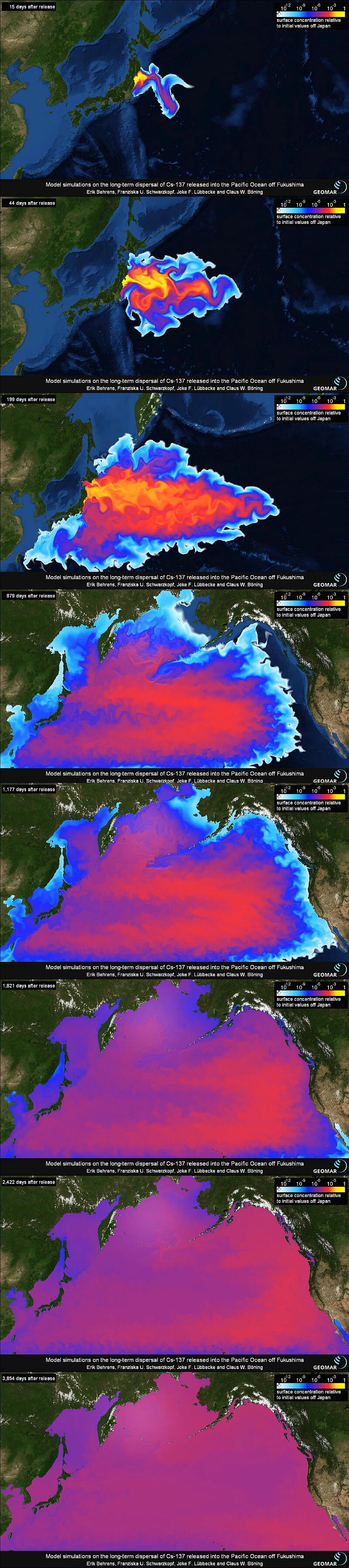
After Fukushima Nuclear disaster to now!


After Fukushima Nuclear disaster to now! Why do we use the nuclear energy for future? Badman Nishioka/rainforest action group/

Sorry!

Sorry! Abe Government don't consider to protect the Raditation waste and Climate Change issue! Badman Nishioka/rainforest action group/
http://www.washingtonsblog.com/2012/03/radioactive-debris-washing-up-on-pacific-coast.html

Can we use the Nuclear Energy now?

Can we use the Nuclear Energy now? Badman Nishioka/rainforest action group/ Unbelievable dangerous Nuclear Energy using!
http://www.netc.com/

Fukushima's Nuclear Disaster made after to now! With Dangerous Zone come to Climate Change!

Fukushima's Nuclear Disaster made after to now! With Dangerous Zone come to Climate Change!
Badman Nishioka/rainforest action group/
http://blog-imgs-62.fc2.com/k/a/l/kaleido11/20130821-5.jpg

Saturday, 17 September 2016

Thought of the day - Love is a chemical reaction


Thought of the day - Love is a chemical reaction
The 3 stages of love are: lust, attraction and attachment. Each stage might be driven by different hormones and chemicals.

Lust is the first stage of love and is driven by the sex hormones testosterone and oestrogen – in both men and women.

Adrenaline, serotonin and dopamine are involved in stage number 2, attraction. Also on this stage love needs to be "blind'
Often, when we have a crush, when we lust for a person, we see only a small percentage of who they really are. The rest we make up for ourselves. Rather than listen, or learn, we smother them in who we imagine them to be, what we desire for ourselves, we create little fantasies of people and let them grow in our... "hearts", or brains?

And this is where the relationship fails. In time, the fiction we scribble onto a person falls away, the lies we tell ourselves unravel and soon the person standing in front of you is almost unrecognizable, you are now complete strangers in your own love. And what a terrible shame it is.

My advice: pay attention to the small details of people, you will learn that the universe is far more spectacular an author than we could ever hope to be.

Finally, oxytocin and vasopressin are involved in stage number 3 because attachment is the bond that keeps couples together.

#personalnonsense   #love

Medgasm


Medgasm
A binaural stethoscope circa 1860 and a Civil War surgeon’s kit, which includes several types of bone saws, bullet forceps, knives and other instruments primarily used for amputations.

Photo by Woodruff Health Sciences Center Library, Emory University.

#history   #morbidideas   #lickmybrain

New role found for the immune system: Controlling Social Interactions


New role found for the immune system: Controlling Social Interactions
In a startling discovery that raises fundamental questions about human behavior, researchers at the University of Virginia School of Medicine have determined that the immune system directly affects – and even controls – creatures’ social behavior, such as their desire to interact with others.

So could immune system problems contribute to an inability to have normal social interactions? The answer appears to be yes, and that finding could have significant implications for neurological diseases such as autism-spectrum disorders and schizophrenia.

“The brain and the adaptive immune system were thought to be isolated from each other, and any immune activity in the brain was perceived as sign of a pathology. And now, not only are we showing that they are closely interacting, but some of our behavior traits might have evolved because of our immune response to pathogens,” explained Jonathan Kipnis, chair of UVA’s Department of Neuroscience.

“It’s crazy, but maybe we are just multicellular battlefields for two ancient forces: pathogens and the immune system. Part of our personality may actually be dictated by the immune system.”

Source & further reading:
https://news.virginia.edu/content/shocking-new-role-found-immune-system-controlling-social-interactions

Gif: Normal brain activity, left, and a hyper-connected brain.
Credit: Anita Impagliazzo, UVA Health System

#neuroscience   #immunesystem   #research